
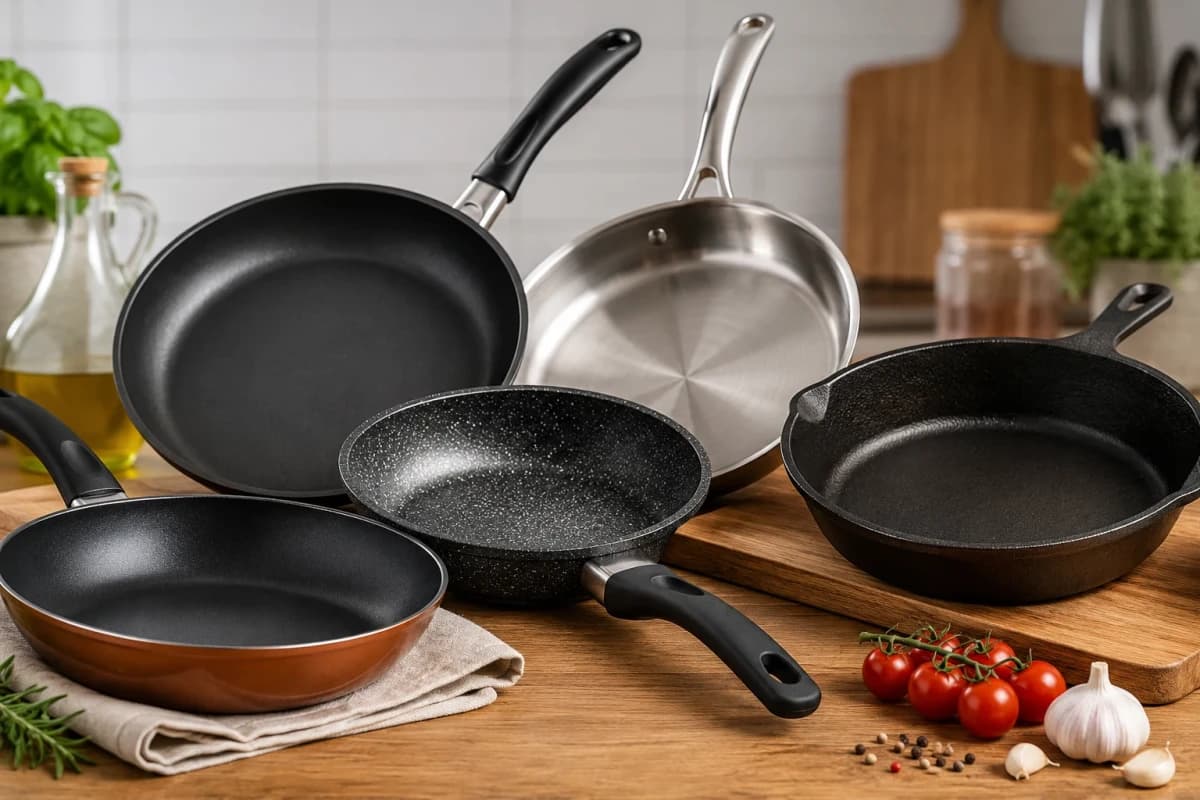
Choosing the right frying pan isn't just about price or appearance. The best frying pan depends on how you cook, the type of hob you use, and the material that suits your everyday needs. Before buying, check the pan's material, size, heat distribution, non-stick coating, handle quality, induction compatibility, and overall construction.
Every frying pan may look similar, but the quality becomes obvious once you start cooking.
At Klönberg, we design and manufacture cookware for retailers, distributors, and home kitchens across Europe. That experience has shown us which features truly affect cooking performance, durability, and everyday usability.
In this guide, we'll explain what to look for when buying a frying pan and how to choose one that suits your cooking style.
1. Choose the Right Frying Pan Material
The material of a frying pan affects how it cooks, how long it lasts, and how much maintenance it requires. The best choice depends on your cooking style and the foods you prepare most often.
Looking for quality cookware? Explore Klönberg's Frying Pan Collection to compare different materials and styles.
- Stainless Steel
Strong, durable, and ideal for high-heat cooking, searing, and everyday use.
- Non-Stick
Requires less oil, releases food easily, and is perfect for eggs, pancakes, fish, and everyday meals.
- Granite
Offers a durable non-stick cooking surface and is a popular choice for everyday family cooking.
- Cast Iron
Excellent heat retention, making it ideal for steaks, roasting, and oven cooking.
- Carbon Steel
Heats quickly and is widely used in professional kitchens for its versatility.
Key Takeaway
There isn't one material that's best for everyone. Choose the one that suits your cooking style, preferred maintenance, and everyday needs.
2. Choose the Right Frying Pan Size
A frying pan that's too small can overcrowd ingredients, while one that's too large may waste energy and make cooking less efficient.
The most common frying pan sizes include:
- 20 cm – Ideal for single portions, eggs, or small side dishes.
- 24 cm – Suitable for one or two people and everyday meals.
- 28 cm – The most versatile size for families and regular cooking.
- 30–32 cm – Best for larger households, batch cooking, or entertaining guests.
If you're buying your first frying pan, a 28 cm model is often the most practical choice because it's large enough for most recipes without being difficult to handle.
3. Check Heat Distribution
One of the easiest ways to recognise a quality frying pan is how evenly it distributes heat.
Poor-quality pans often develop hot spots where food cooks faster in one area than another. This can lead to uneven browning, burnt food, and inconsistent cooking results.
A well-designed frying pan distributes heat evenly across the entire cooking surface, helping food cook more consistently and reducing the need for constant stirring or repositioning.
When comparing frying pans, look for:
- Thick, solid bases
- Multi-layer construction where applicable
- Stable contact with the hob
- Consistent heating across the cooking surface
- Even heat distribution not only improves cooking results but can also help reduce energy consumption over time.
4. Look for a Comfortable and Secure Handle
The handle is something you'll use every time you cook, yet it's often overlooked when choosing a frying pan.
A good handle should provide a comfortable grip, remain secure during everyday use, and allow you to move the pan confidently between the hob and worktop.
Look for features such as:
- Comfortable ergonomic design
- Secure attachment
- Good balance
- Heat-resistant materials
- Oven-safe construction where required
A well-balanced frying pan feels stable in your hand, making everyday cooking both easier and safer.
5. Consider the Non-Stick Coating
If you're buying a non-stick frying pan, the quality of the coating plays a major role in both cooking performance and durability.
A high-quality non-stick surface helps food release easily, requires less cooking oil, and makes cleaning much quicker after meals.
When comparing non-stick frying pans, consider:
- Smooth, even coating
- Scratch resistance
- Easy food release
- Simple cleaning
- Care instructions provided by the manufacturer
To extend the life of a non-stick frying pan, avoid overheating it unnecessarily and follow the manufacturer's recommendations for suitable utensils and cleaning methods.
6. Make Sure It's Compatible with Your Hob
Not every frying pan works on every type of hob.
Before buying, check that the pan is suitable for your cooking surface.
Common hob types include:
- Induction
- Gas
- Electric
- Ceramic
If you use an induction hob, make sure the frying pan has a magnetic base designed for induction cooking.
7. Think About Weight and Balance
The heaviest frying pan isn't always the best.
- A quality frying pan should feel solid without becoming uncomfortable to lift or manoeuvre during everyday cooking.
- A balanced pan makes it easier to stir ingredients, flip food, and carry meals from the hob to the table.
8. Check Whether It's Oven Safe
Many modern recipes require transferring a frying pan directly from the hob into the oven.
If that's something you do regularly, check:
- Maximum oven temperature
- Handle material
- Lid compatibility
- Manufacturer's recommendations
An oven-safe frying pan offers greater flexibility for roasting, baking, and finishing dishes.
9. Consider Cleaning and Maintenance
Choosing cookware that's easy to maintain helps keep it performing well for years.
Some frying pans are dishwasher safe, while others benefit from gentle hand washing to preserve their finish and extend their lifespan.
Following the manufacturer's care instructions is one of the simplest ways to maximise the life of your cookware.
10. Buy for Long-Term Value, Not Just the Lowest Price
Price is important, but it shouldn't be the only factor when choosing a frying pan.
A well-made frying pan may cost more initially, but better materials, stronger construction, and improved durability often provide greater value over time.