

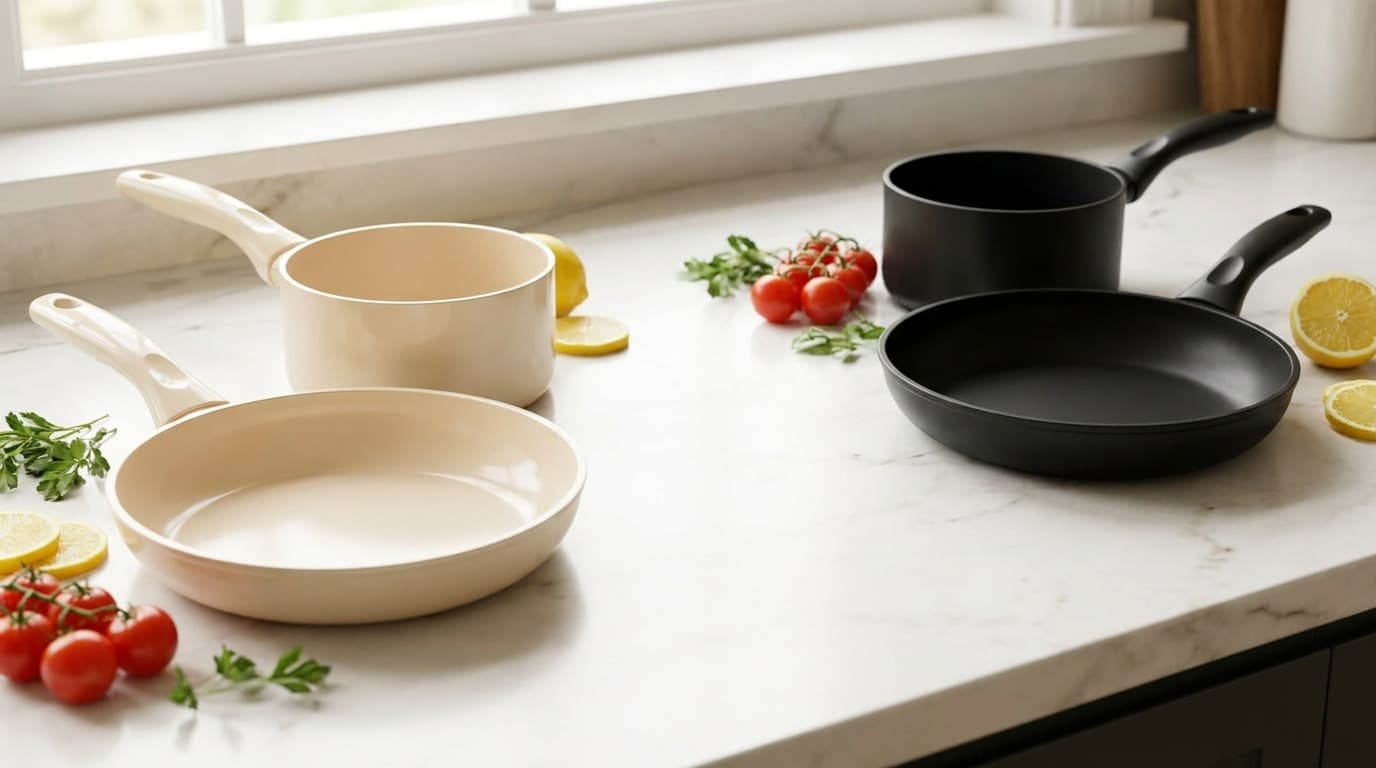
A kerámia és a tapadásmentes edények első ránézésre hasonlónak tűnhetnek, de anyagukban, teljesítményükben és tartósságukban jelentősen különböznek. E különbségek megértése segíthet Önnek kiválasztani a konyhájához és főzési stílusához illő edénykészletet.
Mi az a kerámia edény?
A kerámia edények általában fémalapból, például alumíniumból készülnek, amelyet természetes, homok alapú kerámia réteggel vonnak be. Ez a bevonat sima főzőfelületet hoz létre, amely mentes a szintetikus vegyszerektől.
Gyakran választják környezetbarát jellege, modern megjelenése és természetesen nem mérgező tulajdonságai miatt. Sok otthoni szakács értékeli a kerámia edényeket letisztult dizájnjuk és biztonságosabb főzőfelületük miatt.
Mi az a tapadásmentes edény?
A tapadásmentes edények szintetikus bevonatot, általában PTFE-t használnak, hogy olyan felületet hozzanak létre, amely megakadályozza az étel odaégését. Széles körben ismert kényelmességéről és könnyű használhatóságáról.
Ez az edénytípus különösen népszerű a mindennapi főzési feladatokhoz, mivel az étel könnyedén lecsúszik róla, és minimális olajat vagy vajat igényel. A tisztítást is sokkal gyorsabbá és egyszerűbbé teszi.
A kerámia edények előnyei és hátrányai
A kerámia edényeket nem mérgező összetételükért és környezetbarát gyártásukért értékelik. Mérsékelt hőfokon jól teljesítenek, és megfelelő használat esetén nem bocsátanak ki káros gőzöket.
Idővel azonban a tapadásmentes tulajdonságok halványulhatnak, különösen, ha az edényt nem kezelik óvatosan. A hagyományos lehetőségekhez képest drágább is lehet, és a felület megőrzéséhez kíméletes tisztítást igényel.
A tapadásmentes edények előnyei és hátrányai
A tapadásmentes edények kiváló ételleválasztást kínálnak, így ideálisak kényes ételekhez, például tojáshoz, palacsintához és halhoz. Könnyűek, könnyen kezelhetők és nagyon kényelmesek a mindennapi használatban.
Hátrányuk, hogy a bevonat idővel elkophat, különösen, ha magas hőnek vagy fém eszközöknek van kitéve. Bár a modern tapadásmentes edények általában biztonságosak megfelelő használat esetén, továbbra is szintetikus anyagokra támaszkodnak, ami egyes felhasználók számára aggodalomra adhat okot.
Kerámia vs. tapadásmentes: A fő különbségek
A tartósságot összehasonlítva a tapadásmentes edények gyakran tovább tartanak, ha megfelelően karbantartják őket, míg a kerámia edények hamarabb elveszíthetik hatékonyságukat. A főzési teljesítményt tekintve a kerámia a legalacsonyabb és közepes hőfokon működik a legjobban, míg a tapadásmentes a kényes, alacsony zsírtartalmú főzésnél tűnik ki.
Biztonsági szempontból a kerámia edények természetesen mentesek a szintetikus vegyszerektől, míg a tapadásmentes edények normál körülmények között biztonságosak, de nem szabad túlmelegíteni őket. A karbantartás is eltér, mivel a kerámia óvatosabb kezelést igényel, míg a tapadásmentes könnyebben tisztítható, de továbbra is védeni kell a karcolásoktól.
Hogyan válasszuk ki a konyhánkhoz illő edényeket?
A kerámia és a tapadásmentes edények közötti választás nagymértékben függ a főzési szokásaitól és személyes preferenciáitól. Ha a nem mérgező anyagokat és a környezetbarát dizájnt helyezi előtérbe, a kerámia edények lehetnek a jobb választás. Különösen azoknak megfelelő, akik mérsékelt hőmérsékleten főznek és értékelik az esztétikát.
Ha viszont a kényelem és a könnyű használat a fő prioritásai, a tapadásmentes edények kiváló lehetőséget nyújtanak. Különösen hasznosak a gyors ételekhez és a kényes ételekhez, amelyek sima főzőfelületet igényelnek.
Záró gondolatok
A kerámia és a tapadásmentes edények egyaránt egyedi előnyöket kínálnak, és egyik sem jobb univerzálisan a másiknál. A helyes választás attól függ, hogyan főz, és mit értékel leginkább a konyhájában.
Sok otthoni szakács számára a két típus kombinációja nyújtja a legjobb egyensúlyt. Ez a megközelítés lehetővé teszi, hogy élvezze a kerámia edények biztonságát és stílusát a tapadásmentes lehetőségek kényelmével és teljesítményével együtt, sokoldalúbb és hatékonyabb konyhai elrendezést teremtve.