

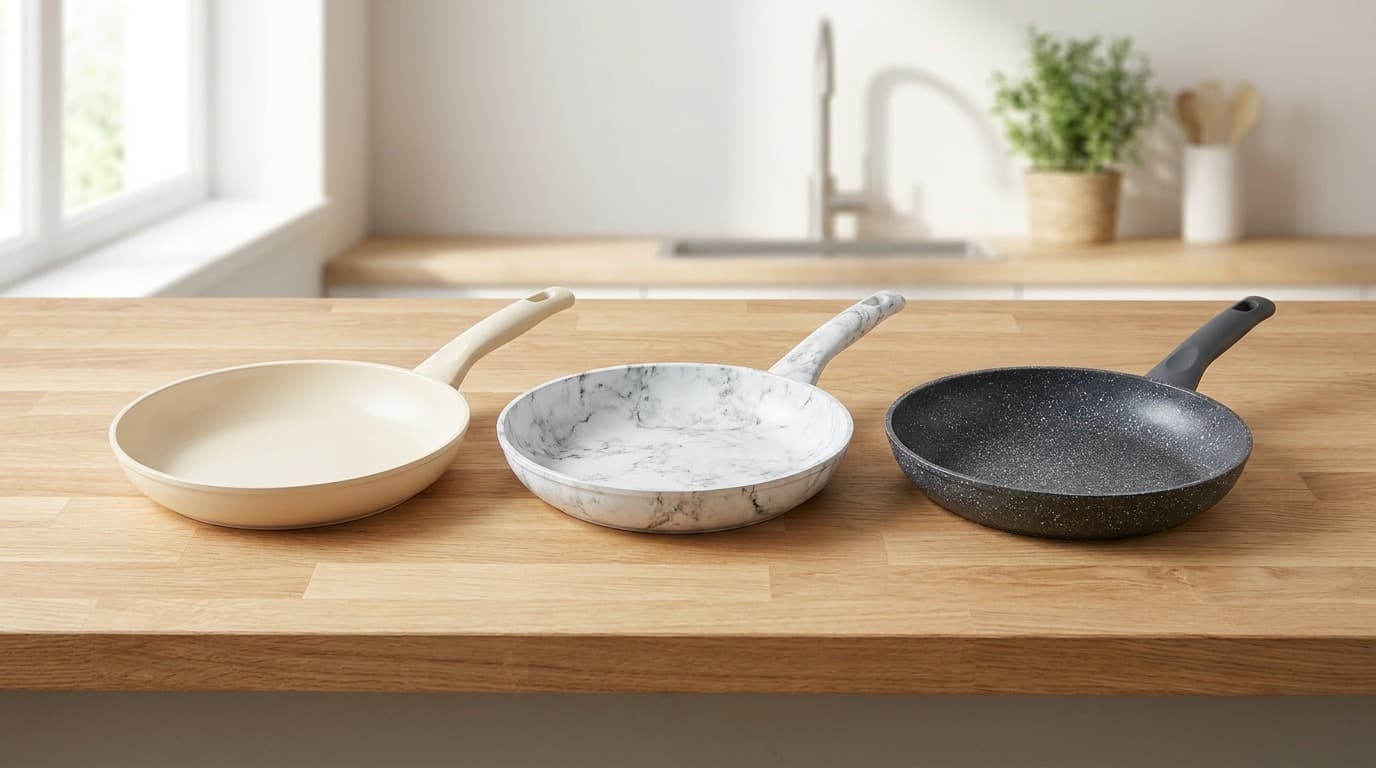
Krótka odpowiedź: Powłoki ceramiczne zapewniają najgładsze uwalnianie potraw i nadają się do delikatnego gotowania. Powłoki marmurowe są twardsze i bardziej odporne na zarysowania. Powłoki granitowe są najtrwalsze z całej trójki — stworzone do intensywnego codziennego użytkowania z najdłuższą żywotnością. Wszystkie trzy są wolne od PFOA.
Stoisz przed ekspozycją naczyń kuchennych — albo przewijasz strony produktów o północy — i ciągle widzisz te same trzy słowa. Ceramika. Marmur. Granit. Wszystkie wyglądają premium. Wszystkie twierdzą, że są nieprzywierające. Ale co tak naprawdę je różni?
Większość opisów produktów ci tego nie powie. Powiedzą „ultra trwałe” lub „znakomite uwalnianie potraw”, nie wyjaśniając dlaczego.
Produkujemy wszystkie trzy rodzaje powłok w Klonberg. Oto szczera wersja — z czego faktycznie wykonana jest każda powłoka, jak zachowuje się w prawdziwej kuchni i która ma sens dla Ciebie.
Najpierw — Z Czego Właściwie Wykonane Są Te Powłoki?
Oto coś, czego większość ludzi nie wie: żadna z tych powłok nie zawiera prawdziwej ceramiki, marmuru ani granitu w żadnej znaczącej ilości. Nazwy opisują, jak powłoka wygląda i jak jest skonstruowana — a nie z czego jest wykonana.
- Ceramika to związek na bazie krzemionki (pochodzącej z piasku) nakładany w procesie zol-żel. Tworzy ultra gładką, niemal szklistą powierzchnię.
- Marmur to powłoka wzmocniona — zazwyczaj na bazie PTFE lub hybrydowa — z dodatkiem cząstek mineralnych, które nadają wygląd nakrapianego marmuru i dodatkową twardość powierzchni.
- Granit to powłoka wielowarstwowa — zwykle od 3 do 5 warstw — wzmocniona cząstkami mineralnymi o efekcie granitu. Dodatkowe warstwy czynią ją znacznie trwalszą niż pozostałe dwie.
Wszystkie trzy są wolne od PFOA i bezpieczne dla żywności. Aby uzyskać niezależne potwierdzenie bezpieczeństwa powłok naczyń kuchennych, zapoznaj się z wytycznymi Europejskiego Urzędu ds. Bezpieczeństwa Żywności dotyczącymi materiałów przeznaczonych do kontaktu z żywnością.
Ceramika — Najgładsza Powierzchnia, Najbardziej Delikatna
Jak się gotuje na niej
Jeśli kiedykolwiek gotowałeś jajko na naprawdę dobrej patelni nieprzywierającej i patrzyłeś, jak zsuwa się bez żadnego wysiłku, to prawdopodobnie była to powłoka ceramiczna. Powierzchnia krzemionkowa jest niezwykle gładka — niemal bez tarcia. Potrzebuje ledwo odrobiny oleju i uwalnia delikatne potrawy jak nic innego.
Gdzie ma trudności
Ta gładkość ma swoją cenę. Ceramika jest najbardziej wrażliwą powłoką z całej trójki. Zaczyna się degradować powyżej 260°C — a większość palników gazowych na pełnej mocy osiąga tę temperaturę w mniej niż dwie minuty. Jest również najbardziej podatna na szok termiczny, metalowe przybory i detergent do zmywarki.
Przy dobrej pielęgnacji wytrzymuje 1–5 lat. Jeśli będziesz ją zbyt mocno eksploatować, spadek wydajności zauważysz w ciągu kilku miesięcy.
Jak rozpoznać, czy ceramika jest dla Ciebie
Regularnie gotujesz jajka, ryby, naleśniki lub crêpes. Ostrożnie obchodzisz się z naczyniami — już używasz silikonowych przyborów i myjesz ręcznie. Chcesz najlepszego możliwego uwalniania potraw i jesteś gotów odpowiednio traktować patelnię.
- KlonBerg KB-4204 — Ceramiczna Patelnia Nieprzywierająca — powłoka ceramiczna krzemionkowa, podstawa z aluminium odlewanego, odpowiednia na wszystkie typy kuchenek, w tym indukcyjne
Marmur — Codzienny Uniwersalny
Jak się gotuje na niej
Marmur plasuje się pośrodku — lepsze uwalnianie potraw niż granit, lepsza trwałość niż ceramika. Wzmocnienie mineralne tworzy twardszą powierzchnię, która radzi sobie z codziennym gotowaniem bez kruchości patelni ceramicznej. Smaż, rumień, smaż — bez obaw o każdy stopień ciepła.
Gdzie sprawdza się najlepiej
Marmur wytrzymuje do 300°C — o 40°C więcej niż ceramika, co czyni go bardziej wybaczającym, jeśli przypadkowo zwiększysz ogień. Toleruje również bardziej energiczne czyszczenie bez natychmiastowego uszkodzenia powierzchni. Przy rozsądnej pielęgnacji oczekuj 2–5 lat regularnego użytkowania.
Najlepszy dla Ciebie, jeśli:
Codziennie gotujesz różnorodne potrawy i chcesz jedną patelnię, która poradzi sobie z większością zadań, nie będąc delikatną. Wszystko oprócz smażenia w wysokiej temperaturze.
- KlonBerg KB-3744 — 12-elementowy Zestaw Marmurowy Nieprzywierający — aluminium odlewane, powłoka marmurowa, hartowane szklane pokrywki, kompatybilny z indukcją.
Granit — Stworzony, by Trwać
Jak się gotuje na niej
Powłoki granitowe wydają się solidniejsze — grubsze, twardsze i zauważalnie bardziej wytrzymałe niż ceramika. Nie musisz starannie zastanawiać się nad każdym przyborem czy skokiem temperatury.
Gdzie sprawdza się najlepiej
Granit wytrzymuje do 450°C — prawie dwukrotnie więcej niż limit ceramiki — a konstrukcja 3–5 warstwowa znacznie lepiej chroni przed zarysowaniami niż pozostałe dwie. Dodatkowa grubość również równomierniej rozprowadza ciepło po dnie.
Przy prawidłowej pielęgnacji granit wytrzymuje 2–7 lat codziennego użytkowania. Około dwukrotnie dłużej niż ceramika.
Najlepszy dla Ciebie, jeśli:
Gotujesz dużo i często, prowadzisz profesjonalną kuchnię lub wcześniej szybko zużywałeś patelnie nieprzywierające. Dla kupujących hurtowo dłuższa żywotność oznacza mniej wymian i niższy koszt roczny.
- KlonBerg KB-8643 — Granitowa Patelnia Nieprzywierająca 24cm — powłoka granitowa wewnątrz i na zewnątrz, wolna od PFOA, kompatybilna z indukcją, zaprojektowana w Niemczech
Liczby Obok Siebie
| Cecha | Ceramika | Marmur | Granit |
|---|---|---|---|
| Gładkość powierzchni | ★★★★★ | ★★★★ | ★★★ |
| Odporność na zarysowania | ★★ | ★★★★ | ★★★★★ |
| Maksymalna tolerancja ciepła | 260°C | 300°C | 450°C |
| Typowa żywotność | 1–5 lat | 2–5 lat | 2–7 lat |
| Najlepsza do | Delikatnego gotowania | Codziennej wszechstronności | Intensywnego codziennego użytku |
| Zmywarka | Nie | Ograniczona | Ograniczona |
| Kompatybilność z indukcją | Tak | Tak | Tak |
| Wolna od PFOA | Tak | Tak | Tak |
Przeglądaj Naczynia Nieprzywierające KlonBergWszystkie naczynia KlönBerg są wolne od PFOA, zaprojektowane w Niemczech i kompatybilne ze wszystkimi typami kuchenek, w tym indukcyjnymi. - Przeglądaj Pełną Gamę Naczyń KlonBerg Aby uzyskać ceny hurtowe, zamówienia masowe i zapytania dystrybutorów: - Skontaktuj się z Klonberg Szybkie Podsumowanie
KlonBerg to producent naczyń kuchennych i dostawca sprzętu kuchennego B2B. Zaprojektowane w Niemczech. Dostępne w sprzedaży hurtowej i masowej w całej Europie. |